Tuesday, March 20, 2012

Heel Pain?

What Does Heel Pain Feel Like? Is This Normal?

No, this is not normal. Foot pain is never normal.

Plantar Fasciitis ( or heel pain ) is very common. It feels like a dull ache most of the time, but when the patient first gets out of bed in the morning, or when getting up after sitting for a period of time during the day, the pain in the heel is impressive. It almost feels like the heel has been bruised, from falling on a rock barefoot, but it is worse.

Plantar Fasciitis (or heel pain) is commonly traced to an inflammation on the bottom of the foot. It is caused by inflammation of the connective tissue that stretches from the base of the toes, across the arch of the foot, to the point at which it inserts into the heel bone. There is a tight ligament that stretches across the arch, from the ball of the foot to the heel bone, called the Plantar Fascia. When we walk, our feet have a tendency to roll inward, toward each other, in a moth that we call pronation. When feet pronate, they flatten, stretch out and the arch elongates. This causes excessive pulling on the Plantar Fascia ligament and attachment of the ligament to the heel bone begins to separate. An injury occurs where the ligament progressively tears off of the heel, fiber by fiber. Bleeding occurs next to the bone and inflammatory fluids accumulate between the ligament and the bone, forming a Bursitis, or fluid-filled sack.

Over time, the body lays down scar tissue, in an attempt to "glue" the detached ligament fibers back on to the bottom of the heel bone.  Over the course of 3-5 years the scar tissues calcifies and this calcium deposit eventually becomes visible in x-rays as the heel spur. This inflammation of this Plantar fascia ligament is called Plantar Fasciitis, and in addition to the Bursitis, is what causes pain.

If you experience heel pain give Eastern Shore Foot Center a call. Schedule your appointment with Dr. Braun today and find out your options to alleviate pain. 251-626-5065. Visit our website, www.easternshorefootcenter.com

Tuesday, March 13, 2012

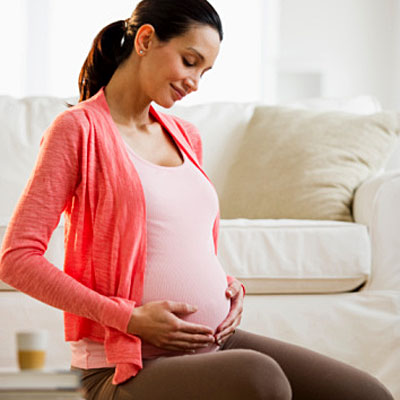
Why do feet hurt during pregnancy?


Why do your feet hurt now that you're pregnant?

Pregnancy triggers many different changes in the woman's body. Due to the natural weight gain during pregnancy, a woman's center of gravity is completely altered. This caused you to stand differently, adding pressure to the knees and feet. Two of the most common foot problems are over - pronation and edema.

Over-pronation (flat feet) is when the arch flattens out upon weight bearing and feel roll inward when walking. This can create stress or inflammation on the fibrous band of tissue that runs from the heel to forefoot. The reason many pregnant women suffer from over-pronation is the added pressure on the body as a result of weight gain.

Edema (swelling in the feet) normally occurs in the latter part of pregnancy. Edema results from the extra blood accumulated during pregnancy. The enlarging uterus puts pressure on the blood vessels in the pelvis and legs causing circulation to slow down and blood to pool in the lower extremities. The total water fluid in the body remains the same as before pregnancy, however, it becomes displaced.

TREATMENT AND PREVENTION

There are EFFECTIVE ways to treat both over-pronation and edema during pregnancy.

Over-pronation can be treated with orthotics. In our office we can take digital scan of your feet to detect pressure points, and have a pair of customer inserts ready in less than 2 weeks.

 Edema in the feet can be minimized by:

  • Elevating feet as much as possible
  • Wearing proper footwear
  • Drinking plenty of water
  • Have your feet measured several times throughout your pregnancy, as they will probably change sizes.

 If you are pregnant call Eastern Shore Foot Center today and schedule an appointment for a foot exam. We can get you in custom orthotics right away to prevent foot problems during pregnancy. Check us out online www.easternshorefootcenter.com , call us 251-626-5065. Follow us

The body's healing process

The Body's Healing Process

From the moment an injury occurs whether it is a broken bone, torn ligament, severe sprain or even a  surgically invasive procedure, your body goes to work to repair the damage.  There a several stages in the healing process the following is a simplification of the various stages:

At the moment of injury: Chemicals are released from the damaged cells which trigger inflammation. Blood vessels at the injury site become dilated; blood flow increases to carry nutrients to the site of tissue damage.

Within hours of injury: White blood cells (leukocytes) travel down the bloodstream to the injury site where they begin to tear down and remove damaged tissue, allowing other specialized cells to start developing scar tissue.

Within days of injury: Scar tissue is formed on the skin or inside the body. The amount of scarring may be proportional to the amount of swelling, inflammation, or bleeding within. In the next few weeks, the damaged area will regain a great deal of strength as scar tissue continues to form.

Within a month of injury: Scar tissue may start to shrink, bringing damaged, torn, or separated tissues back together. However, it may be several months or more before the injury is completely healed.

Bone healing:  Healing of broken bones whether due to a fracture of surgery is the same. There are three basic stages including Inflammation which starts immediately and can last for several days.  This begins with bleeding in the area which clots at the fracture site providing the initial structural stability and blueprint for producing new bone. Second stage is bone production; the clotted blood is replaced with fibrous tissue and cartilage.  This is also referred to as soft callus and is not seen on x-rays, within several weeks this soft callus is replaced by hard bone called hard callus and can be seen on the x-rays. Finally we have bone remodeling, this goes on for several months, bone continues to form and becomes compact and the bone appears similar to its original shape. Weight bearing such as standing or walking encourages bone remodeling.

Wednesday, February 29, 2012

What’s a bump in the back of the heel?

What’s a bump in the back of the heel?

The bump on the back of the heel is called a Haglund’s Deformity.  It is actually an enlargement of the bone, usually due to spurring of the posterior (rear) aspect of the heel.  Many years ago this was called a “Pump Bump” because it was noted in women who wore certain shoes.   This condition is not gender specific, it is inherited.  Many people have an enlargement behind their heels and never noticed it, nor have they had any problems.  Some people find certain boots or shoes rub and irritate the area, so they elect to choose more comfortable, accommodating shoes.  Finally, there are some who suffer with constant pain in the area and will require surgical excision of the boney protuberance. 

Monday, February 27, 2012

I did all the exercise for Plantar Fasciitis and now I can’t walk?

I did all the exercise for Plantar Fasciitis and now I can’t walk?

If you have been stretching the band underneath your foot by hanging off a step, pushing against a wall, pulling your toes back, or even rolling a can with your foot because you read it on the internet or your doctor told you to, you may actually be doing more harm than good.  When your feet feel a little “tight” in the morning, stretching will be fine, but if you really have Plantar Fasciitis you may be irritating the heel.  The band that is attached to the heel becomes thickened over time, it no longer can flex so pulling and releasing the band at the attachment to the heel will cause irritation to the area.  Think of a thick rubber band attached to a bone, a slow consistent stretch that lasts an hour or more is fine, but a pull and release over and over is like taking a rubber band and snapping it against a painful area.  Doing the repetitive short stretches will only cause micro tears in the band leading to severe pain.  If you have heel pain and you are attempting to reduce it by stretching then get a Night Splint, these are medical devices that give a consistent even stretch to the plantar fascia allowing it to slowly stretch out over time.  Wear the splint for at least an hour a day and stop irritating your foot with inconsistent stretches.  If you do get a night splint please READ our instructions on how to wear it, there is an article on our website that explains how to wear one and why it works. 
Need more informaton? Come see Dr. Braun at Eastern Shore Foot Center. Visit us on Facebook and follow us on twitter

Friday, February 24, 2012

The back of your heel tender?

The back of my heel is tender.

The Achilles tendon attaches to the back of the heel.  When you have been very active this tendon can become strained and tender. It is actually noted to be one of the most injured tendons in the human body. Rest, ice and elevation may be all you need to reverse the tenderness.  If this is a persistent problem then there is a chance you are placing too much strain on your feet with activity so you might need heel lifts or functional orthotics.  The heel lifts are placed into your shoes to take the pressure off the Achilles tendon, but entire support for the entire foot is preferable.  If the area is just tender, not truly painful, then we recommend a product called BioFreeze, it helps reduce the inflammation.  If the condition is severe please get to a podiatrist, you may have torn or partially torn the tendon. 

My child limps after they have been running around, why?

My child limps after they have been running around, why?

Many children have a condition called Sever’s Disease, also called Calcaneal Apophysitis.   A heel becomes a solid single bone over many years, by the time a person is 16 usually the calcaneus (heel bone) has matured completely.  But, from the age of 6 on, the bone has a growth plate located just behind the heel.  This growing portion of bone has not fused with the main body of the heel; therefore it is vulnerable to trauma during any sports activity.  X-rays often show small fractures in the area.  Treatment is typically a custom insert that stabilizes the heel and takes pressure off the growth plate, allowing the child to maintain a busy sports schedule with minimum to no down time.  As a parent you should ice, elevate and rest the heel after a sport and bring your child to a podiatrist, they are the best equipped to reverse this condition and keep your child active.

Want more information? Visit www.easternshorefootcenter.com